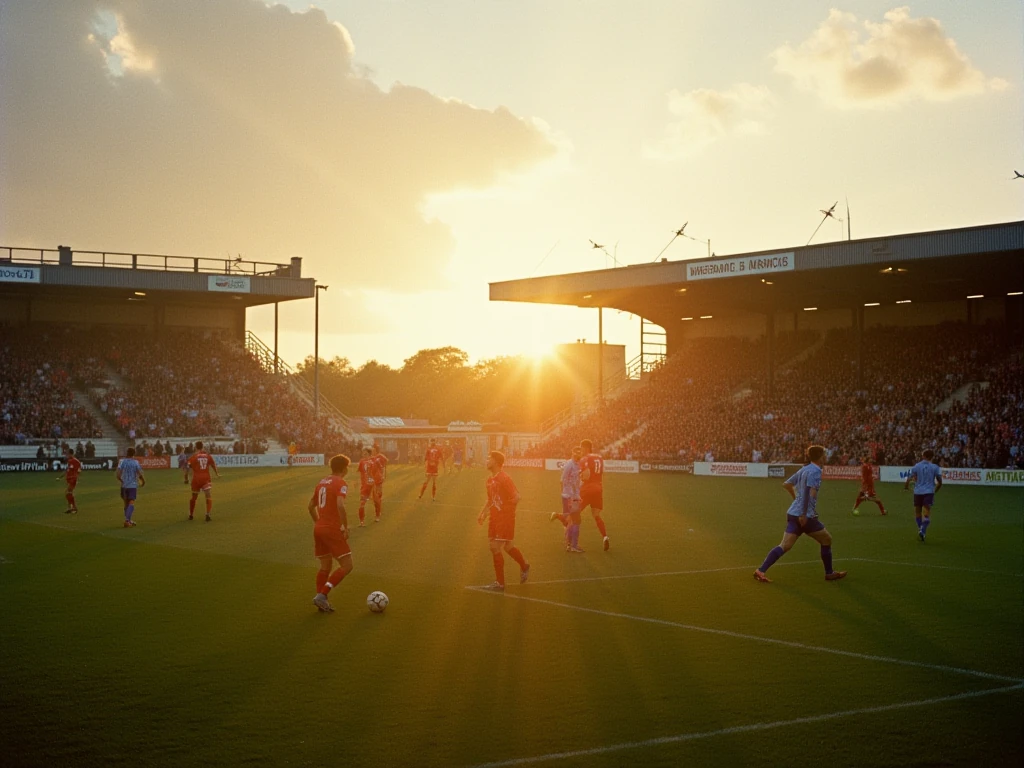

The news that Jon Daly has departed his role as manager of Waterford FC has sent a ripple of regret and apprehension through the club's loyal fanbase. Rooted firmly at the foot of the Premier Division table, the Blues find themselves in a perilous position, a situation that ultimately led to the difficult decision to part ways with the gaffer.
Daly's tenure, while relatively brief, began with a sense of cautious optimism. Having taken the reins during a period of transition, the former Ireland international inherited a squad that, while talented, needed significant reshaping to truly compete in the top flight. The challenge of guiding a newly promoted side in the unforgiving landscape of the Premier Division is a monumental one, and it quickly became apparent that the step up in quality demanded a different approach. Initial performances showed flashes of potential, but consistency, that elusive characteristic of successful teams, remained stubbornly out of reach. Supporters at the RSC often found themselves witnessing spirited efforts that ultimately yielded no points, a frustrating cycle that eroded confidence week by week. The points tally continued to stagnate, and the gap to safety grew wider, painting a bleak picture for the future.
From a tactical perspective, the team under Daly often appeared caught between two stools: an understandable desire to solidify defensively against superior opposition, yet an equally pressing need to create goalscoring opportunities. While the backline, at times, showed resilience, the overall defensive structure frequently crumbled under sustained pressure from more clinical sides. The midfield struggled to assert dominance, often getting bypassed, and the link between the middle of the park and the lone striker or attacking trio seemed disjointed. Goals, the lifeblood of any team, became increasingly scarce. Too many games passed without a genuine cutting edge, and when chances did present themselves, they often went begging. This inability to convert pressure into tangible rewards on the scoreboard meant that even when the Blues competed well for large swathes of a match, they invariably ended up on the wrong side of the result. The tactical nuances required to outmaneuver seasoned Premier Division teams simply weren't consistently there, leaving many to wonder if the game plan was truly unlocking the potential within the squad.
The growing unease among the faithful was palpable. While the initial backing for Daly was strong, born out of respect for his playing career and the inherent hope associated with any new appointment, the relentless string of disappointing results began to chip away at that goodwill. Whispers on the terraces turned into louder grumbles, and social media platforms became hotbeds of debate and frustration. Fans, having endured the roller-coaster of promotion and relegation battles in recent years, were desperate for stability and a team that could genuinely compete. Seeing the Blues rooted to the bottom, game after game, was a bitter pill to swallow. The loyal core continued to turn up, vocally urging their side on, but the energy of the crowd, so crucial for a home team, often dissipated as the opposition inevitably found a way through or a clear-cut opportunity was squandered. The pressure from the stands, while never overtly hostile, undoubtedly added another layer of intensity to an already stressful situation for the management and players alike.
Indeed, the challenges facing any manager in the League of Ireland, particularly one tasked with consolidating a club's position in the Premier Division, are immense. Budgets are tight, competition for talent is fierce, and the demands of a professional setup within a semi-professional environment in many respects can be taxing. Daly, by all accounts, worked tirelessly, but sometimes hard work alone isn't enough to stem the tide. The club's ownership, with their clear ambitions for Waterford to be a force in Irish football, had to make a pragmatic decision. The investment poured into the club, from facilities to player wages, is significant, and the expectation is for results that reflect that commitment. The departure, therefore, can be viewed as a calculated risk, a desperate measure to inject new life and a different perspective into a squad that desperately needs a spark to ignite their survival hopes.
Looking ahead, the search for a new gaffer will be paramount. The incoming manager will need to possess not only a deep understanding of the local game but also the tactical acumen to quickly address the team's deficiencies and instill a winning mentality. They must be a motivator, capable of galvanizing a squad that is no doubt low on confidence, and charismatic enough to reconnect with a fanbase yearning for success. The task is unenviable, a genuine relegation dogfight awaits, but it is also an opportunity for a manager to leave an indelible mark on the club's history. The right appointment could be the catalyst for a remarkable turnaround, pulling the Blues out of the mire and securing their Premier Division status.
The remainder of the season is now a high-stakes affair, a genuine fight for survival that will test the character of every player and the resolve of the entire club. With crucial points still on offer, every game becomes a cup final, and every decision, from the boardroom to the touchline, will carry immense weight. The focus must immediately shift to finding a leader who can not only navigate the choppy waters of the relegation zone but also lay the groundwork for a more stable and successful future for Waterford FC. The loyal supporters deserve a team that fights for every blade of grass, and the club's immediate priority is to ensure that the next gaffer is the person who can deliver precisely that.